21 Jun 2023

Developing Academic Skills Portfolio of Tasks copy 4

Developing Academic Skills Portfolio of Tasks copy 4


Task One: Time Management


  1. Demonstrate your time management skills by creating a timetable for study during this module. In your timetable highlight your work commitments, family time, study time and recreational time.


  1. Write a reflection on how you managed your time, utilising the timetable and using Pomodoro or Eisenhower to manage your study. Use Gibb’s model to structure your reflection.


Like me many students have false expectations of themselves and their course, career, and institution prospects as they approach this new phase of academic life with insufficient knowledge about academic life. Individuals' expectations during this period of transition might be seen as a barrier to their long-term success, leading to dropout from the programme, interpersonal relationship problems, substance abuse, and social isolation. Student life may be stressful as they must learn new study techniques; cope with criticism, public speaking; endure family separation; as well as dissatisfaction with the expectations that have been placed on them. Consequently, the student may get anxious, demotivated, or even decide to drop out of the course and/or university. The commitment in learning and psychological development during a student's university career is jeopardised by the adaptability of students. Many elements, both personal and environmental, are involved in the process of adapting to university life. Theory and research in this field demonstrate problems in combining these aspects, despite the literature's recognition of their relevance In an effort to provide light on the process of adapting to the academic environment.

During the first evaluation of my study skills academic exam, I found that multitasking was my weakest area. Because I would often put things off till the last moment and strain myself out attempting to meet deadlines, this was a top priority for me in terms of developing my skill sets. I set a goal for myself at the start of the year to improve this. After a period of time, I may see the fruits of my labour. I was able to complete most of my tasks on time because to the wise objective I set for myself about time management. For homework assignments due over the week, I would evaluate and assemble them on Mondays. Additionally, the monthly calendar helped me keep track of forthcoming chores for the next week. I could log in to the syllabus to get additional information if I wanted it.

There are numerous more advantages to having a slower mind, such as its ability to keep reeling even if I don't think about it at all. In general, more time is needed to complete a project with a higher level of complexity or sensitivity. Prioritize the activities that are directly in front of me. Time management may be improved with the use of two kinds of prioritising grids.

As soon as I had confirmed that all of the assignments were due, I would divide up the burden depending on the importance of each one. As an example, I may have a short essay due on Friday that was due on Monday. To avoid having to write the full essay in one sitting, I would divide it up into smaller chunks over the course of many days. It's common for me to set aside one hour a day to write on an essay and finish it by the end of the day on Friday. Actually, this is merely a strategy in motion. The finest ideas come to me when I'm in the shower, not during a meeting.? Because, ladies and gentlemen, as much as it annoys us, humans have sluggish minds. These magnificently sluggish brains, however, hide a wealth of other abilities, one of which is the astonishing ability to keep spinning even while I'm not paying attention.

Task Two: Resources and reflection


Identify 4 key resources that you have used to support your study during this module. Explain how you used each resource in your studies.


Google Docs 

There are several benefits to using Google Docs, such as the ability to collaborate with others and monitor changes to my work. The same document may be edited by many users at the same time. The professional version is more secure and gives workers more control but I have found that the free version can handle all of my requirements. Google Docs, like Microsoft Word, Open Office, and LibreOffice, may be used to create and modify documents using its sophisticated editing and layout capabilities. There are several typefaces to choose from, as well as the ability to search for photos, quotations, or text extracts right from the programme and then post them on the internet. It has the ability to access, edit, and save Microsoft Word files because of its interoperability with Microsoft office software. As a result, we are able to move Word documents into Google Docs and vice versa. Microsoft office file formats including docx, docm, and open-source office products like odt may be imported and exported to Google documents formats.

Evernote

This is the second best app for me for taking notes and organizing them in aprecise manners. The voice memo feature helps me to a lot specially in particular time. It's possible to take a picture of a handwritten page using a note-taking app like Evernote (available for both Android and iOS) and turn the notes into searchable digital text. Keep track of what matters by using tasks, reminders, and alerts. The Home dashboard and note layouts may be customised to fit my thinking style.

White Board 

I use a personal white board in my home to keep my idea front of me this help me to understand my current task in hand and the upcoming schedule, the traditional way help me a lot. 

Prezi 

Whether I am presenting a project Prezi's multiplatform presentation solution can handle all of my needs. Unlike PowerPoint, Prezi's interactive platform lets me to include not just static images and graphs, but also moving pictures and videos. That’s help me a lot to make my presentation premium 


  1. Write a reflection on the development of your academic skills during this module. For example, writing skills, referencing skills, researching skills and summarising skills. Use Gibb’s model to structure your reflection. 


Description, 

My academic achievement will be enhanced if I improve my study and time management abilities. Learning and practising study skills is much like learning and practising arithmetic or English. I'll be able to get the most out of my college and high school education if I get a good start now. Begin by analysing my degree of familiarity with fundamental abilities like note-taking, test-taking, and time-management. 

Feelings, 

The next step is to devise an organising strategy that will help me learn the fundamentals of being a high-achieving student. When I'm taking notes, I pay attention to the important points made by the teacher. Subsequent to each of the main points, add any relevant details. No matter what my instructor says, I don't strive to write it all down. When I'm done with class, I'll go through my notes and fill in any missing information. I may check my notes against the material in my textbook. Also, I may want to join a study group with my other students so that we can all learn from one another. 

Evaluation, 

Re-write my notes and use a highlighter to underline the most critical details. This will help me remember what I learned in class. After following the note-taking advice above, I already have an advantage when it comes to exam preparation. Compare the material in a study guide to what I learned in class. Once I've done that, I'll make flash cards. Use my notes and the teacher's advice to come up with questions for the class. I will take a test on my own and work with a friend. Before taking an essay exam, I should write down my responses. The practise of putting down the knowledge will help me better understand it. 

Analysis, 

Preparation is the key to a successful outcome. If I wait until the last minute to study, I'll get a poorer grade and more stress. Make sure I get enough sleep and eat breakfast on the morning of my test, and I'll be sure to do well. A strong academic foundation can only be achieved via effective time management techniques. Creating and adhering to a timetable is essential if I have enough time to study, participate in school activities, and have a good time. My examinations and tasks will be organised in a daily planner and calendar. 

Conclusion And Action Plan.

I need to Assume how long it will take to accomplish these activities and arrange study time at least two weeks before the due date. I make time for enjoyment in my routine. I am more productive if I am well-balanced. A good study atmosphere is essential if I want to enhance my academic abilities. I could create a designated study area in my house, for example. Make sure the environment is conducive to my ability to concentrate, since only I know what works best for me. Make studying a habit by doing it at the same time each day. I'll take breaks every hour if I'm studying for a long period of time. To achieve my objectives, I must ensure that I have the necessary circumstances for studying.


Task Three: Literature searching, note taking and evaluating


A) Find a book online using Perlego on the topic of Academic Integrity, plagiarism and referencing. Summarise the key points using the Cornell note taking method. State the full reference of the book (AU Harvard), demonstrate your note taking and then give a summary of the source in terms of its credibility (using the CAARP guidance, which is documented on iLearn).


  • Pears, R & Shields, GJ 2010, Cite them right : the essential referencing guide, Palgrave Macmillan, Basingstoke.


CURRENCY . 

This book is widely regarded as the most comprehensive and user-friendly reference guide on the market today. To teach students how to identify and cite sources of information and prevent plagiarism, tutors depend on the guidance they provide their pupils. In addition to the newest electronic sources, this updated version includes fresh and extended information.

AUTHORITY

At Durham University Library, Richard Pears serves as a Faculty Support Librarian. In addition to being a postgraduate research student, he has been working in libraries for the last fifteen years, both in academic and public. The University of Cumbria Library's Learning Adviser, GRAHAM SHIELDS, works in the United Kingdom. Over the course of his career, he has worked in university libraries, where he has developed strong relationships with faculty and students alike.

RELEVANCE & RELIABILITY

Over the last 25 years, the quantity and diversity of sources that may be cited in academic writing has grown exponentially. In 1992, Cite them correctly was born as a single A4 piece of advice on how to cite several print sources. Graham Shields and Graham Walton prepared a 20-page brochure in 1995 that served as a basic reference guide for students at the institution. As a result of this, the pamphlet expanded first into a booklet, and then into Cite them correctly the book, by Richard Pears and Graham Shields.


Each successive version of Cite them properly was groundbreaking in that it included new forms of source material. Additionally, Graham and Richard took great effort to include user input to make Cite them properly as current and valuable as possible for students and teachers.

With this new user-friendly platform, Cite them correctly has entered its eleventh edition. When you have instant access to Cite them correctly, it is simpler than ever to cite the sources that important to and increase scholarly conversation.

PURPOSE/POINT OF VIEW 

  • Cite any source of information, from ancient writings to Twitter, as long as it's reliable.

  • Examples are provided in Harvard, APA, Chicago, IEEE, MHRA, MLA, OSCOLA, and Vancouver referencing styles..

  • Simple guidelines for citing internet sources

  • Non-English publications, graffiti, packaging, wills, medical photos, monuments, PowerPoint presentations, and more are included in the collection.

  • Tips on how to prevent plagiarising one's own work


B) Find a newspaper article or website online on the topic of Academic Integrity, plagiarism and referencing. Summarise the key points using a mind map note taking method. State the full reference of the book (AU Harvard), demonstrate your note taking and then give a summary of the source in terms of its credibility (using the CAARP guidance, which is documented on iLearn).

(Max 750 words) (25 marks)


Citation Five Pillars of Academic Integrity | Graduate Connections | Nebraska 2014, Unl.edu.

What is the difference between academic integrity and plagiarism? | Turnitin

CURRENCY .

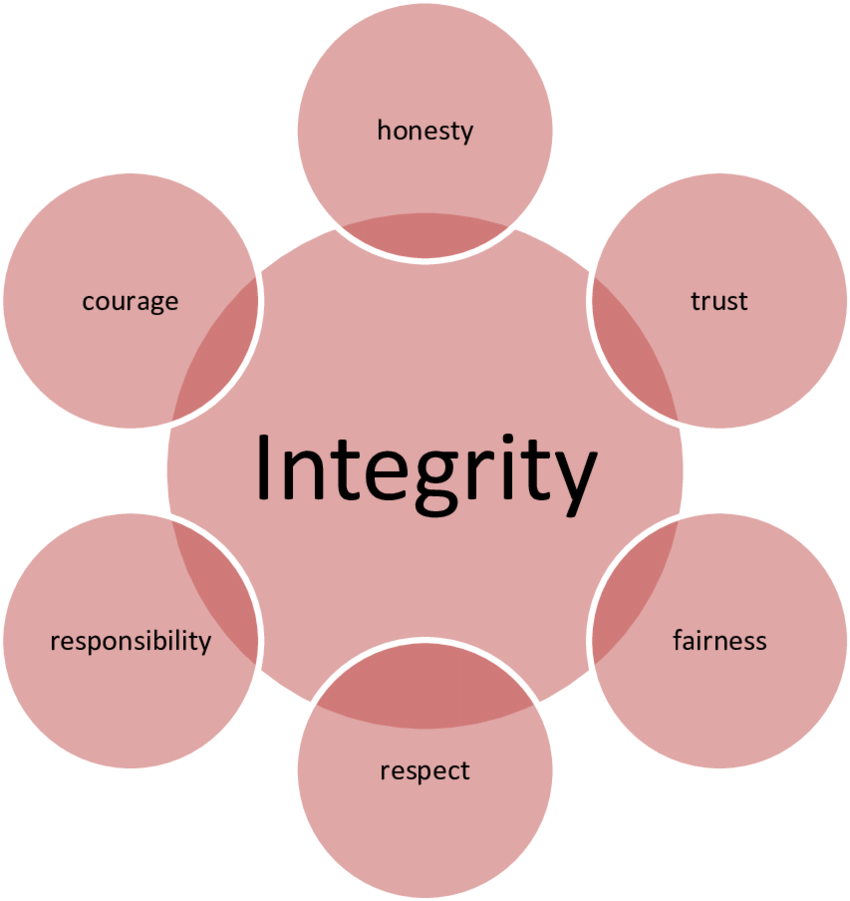
As a part of the university's mission to facilitate the interchange of ideas and the development of new knowledge, academic integrity is essential. In order to promote academic integrity, plagiarism, fabrication, and falsification are often listed as examples of academic dishonesty that should be avoided. There are times, though, when discussions on integrity are based on suspicion and distrust rather than trust, respect, and progress. There are five pillars of academic integrity outlined by the International Center for Academic Integrity (ICAI). Honesty is a kind of honesty. Honesty is the foundation of all other academic integrity pillars. To be honest, one must assess one's own talents and accurately describe one's work. When individuals have faith in one another and in the larger community, it makes it easier to work together. When everyone is doing their best job and the structure and regulations are fair, there is a sense of trust in the system. Trust is built on fairness. 

AUTHORITY

The guidence is made by International Center for Academic Integrity

Everyone in the community should have faith that they will be treated equally and held to the same standards of conduct as the rest of the group. For example, you may be certain that r teachers will not provide preferential treatment to any one student. The finest work comes from a fair and equitable workplace. Respect allows for the sharing of different viewpoints and beliefs. Student respect is shown by listening to various points of view, being prepared, meeting deadlines, and performing to the best of their abilities. A fundamental value, Educators exhibit respect for their pupils by listening to their ideas and delivering full and honest criticism. 

RELEVANCE & RELIABILITY

Taking responsibility for one's actions and one's job is admitting one's own agency and accountability. It's everyone's responsibility to do their job with honesty, and they urge others to do the same. 

PURPOSE/POINT OF VIEW

Starting with individuals, academic integrity positively impacts everyone in the community.


Task Four: Plagiarism and referencing


  1. Explain what is meant by plagiarism and academic integrity. Support your explanations with definitions and citations. 


Integrity 

Academic integrity or academic honesty is often referred to be the cornerstone of academic life by many sources. It refers to how to conduct oneself when doing research, producing a paper, or completing a project in an academic setting. Honesty, trustworthiness, respect, justice, and accountability are the cornerstones of academic life (Bouville 2008). In order to maintain academic integrity, one must abide by these ideals. Integrity in the classroom requires that students not use someone else's intellectual property without crediting them. Plagiarism falls under this category.

Plagivism is described as the act of stealing or passing off another person's thoughts or ideas as your own without giving due credit to the source of inspiration (Whitaker 1993).

Cheating is defined as copying from a peer, bringing unlawful aids or solutions it in to a test or exam, or any combination of these actions.

Fabrication and falsification are the acts of inventing evidence or altering outcomes in order to support an argument.

Submitting more than one paper for the same class when credit has already been granted in another class

Theft or destruction of library resources are examples of scholarly materials being misused.

Complicity in academic misconduct is defined as contributing to the academic dishonesty of another student.


Plagiarism:

Representing another's ideas and goods as own is a kind of plagiarism. Plagiarism is defined as the use of someone else's work without crediting the author or creator of that work.

When repeating or paraphrasing another person's remarks verbatim, it is important to recognise the source. When  quote or paraphrase someone else's words or ideas without crediting them,  are guilty of plagiarism as well (Neville 2016). Plagiarism is the act of using someone else's words or ideas without giving credit to the original author. There are many different types of plagiarism, including textual and electronic texts accessible on the internet. But it also applies to images, charts, graphs and statistics as well as content collected from lectures or television shows. The term "all generated sources" is used to describe this. A lack of familiarity with citation and document standards may lead to plagiarism among less-experienced authors, who may also be integrating norms from one area or culture into another. A novice writer may not know the difference among direct quoting, paraphrase and summarization. Plagiarism might also be the result of insufficient note-taking skills on the part of students.

It is widely recognised that ethical conduct in academic practice and job behaviour are significant graduate characteristics that must be met in order to be considered professional in the workplace. Academic integrity extends beyond the monitoring of university assessments to include the training of graduates as professionals, underlying their behavior at work and reflecting on the personal integrity and honesty in all parts of their lives.

  1. Produce an ‘at a glance’ leaflet that gives examples and explanations on how to produce a reference list using AU Harvard referencing. Include examples on how to insert in-text citations and direct quotations.


Reference list

Bloch, J 2007, ‘Plagiarism across cultures: Is there a difference?’, Indonesian JELT: Indonesian Journal of English Language Teaching, vol. 3, no. 2, pp. 1–13.

Bouville, M 2008, ‘Plagiarism: Words and ideas’, Science and engineering ethics, vol. 14, Springer, no. 3, pp. 311–322.

Five Pillars of Academic Integrity | Graduate Connections | Nebraska 2014, Unl.edu.

Neville, C 2016, The complete guide to referencing and avoiding plagiarism, Open University Press, London.

Whitaker, EE 1993, ‘A pedagogy to address plagiarism’, College Composition and Communication, vol. 44, JSTOR, no. 4, pp. 509–514.


Developing Academic Skills Portfolio of Tasks copy 4

Developing Academic Skills Portfolio of Tasks copy 4


Task One: Time Management


  1. Demonstrate your time management skills by creating a timetable for study during this module. In your timetable highlight your work commitments, family time, study time and recreational time.


Weekly timetable


Monday

Tuesday

Wednesday

Thursday

Friday

Saturday

Sunday

Morning

7 – 8

Workout and Breakfast 

Workout and Breakfast 

Workout and Breakfast 

Workout and Breakfast 

Workout and Breakfast 

Workout and Breakfast 

Workout and Breakfast 

8 – 9

Commute

Commute

Commute

Commute

Commute

Commute

Commute

9 – 10

Attending Class

Attending Class

Attending Class

Attending Class

Attending Class

Attending Class

Attending Class

10 – 11

Library 

Library

Library

Library

Library

Library

Library

11 – 12

Group Discussion

Group Discussion

Group Discussion

Group Discussion

Group Discussion

Group Discussion

Group Discussion

Afternoon

12 – 1

Attending Class

Attending Class

Attending Class

Attending Class

Attending Class

Attending Class

Attending Class

1 – 2

Library

Library

Library

Library

Library

Library

Library

2 – 3

Lunch 

Lunch 

Lunch 

Lunch 

Lunch 

Lunch 

Lunch 

3 – 4

Attending Class

Attending Class

Attending Class

Attending Class

Attending Class

Attending Class

Attending Class

4 – 5

Hangout 

Hangout 

Hangout 

Hangout 

Hangout 

Attending Class

Attending Class

5 – 6

Commute

Commute

Commute

Commute

Commute

Commute

Commute

Evening

6 – 7

Home Study

Home Study

Home Study

Home Study

Home Study

Home Study

Hangout

7 – 8

Dinner

Dinner

Dinner

Dinner

Dinner

Dinner

Dinner

8 – 9

Netflix

Netflix

Netflix

Netflix

Netflix

Netflix

Netflix


NOTES:

  1. It's time to take a closer look at my existing schedule. A excellent place to begin is to evaluate how I presently spend my time. Determine how much time is available for study by looking at this. The activities that take up time and can be eliminated may also be found.

  2. Create a schedule for the day. The first step in creating a schedule is to identify the periods when I have obligations. Then I may begin to set aside time for the things that are most essential to I, such as my course work. I must devote a significant amount of time to each online course in order to excel. The time I set aside for self-care and further study should be included into my schedule.

  3. Make a plan for my work. I may either accomplish this in a formal manner or just spend some time contemplating it. Good students have long-term and short-term objectives. Readings and activities should be completed before the test period is over as a long-term aim. I may set a short-term objective of working hard for an hour before taking a break.

  4. Good habits may be formed. An effective study plan is one that is constantly adhered to. It's important to have a good start and develop good habits from an early age. These are a lifesaver when I am feeling run down, fatigued, or just plain unmotivated.


  1. Write a reflection on how you managed your time, utilising the timetable and using Pomodoro or Eisenhower to manage your study. Use Gibb’s model to structure your reflection.

DESCRIPTION 

With the correct amount of managerial time, they may be able to do more with less effort. As we learn to manage our own time better, my ability to concentrate improves. Efforts that are more focused bring higher outcomes, as well. We can do more in less time if we learn to properly manage our time.

FEELINGS.

There are many aspects of my happiness that are dependent on our ability to efficiently manage our time, all of which could be jeopardised. Managing our time is all that is required to deal with the challenges of daily life in an effective and responsive way. Rather than allowing others control our schedules, we must master the art of time management if we are to achieve success. Managing our time effectively requires sound judgement and a clear idea of the goals we want to achieve in our professional development. 

EVALUATION

My ability to focus and multitask may soon be undermined if we fail to appropriately manage our time. Calculating how long it will take to complete might be difficult as a consequence. Learn how to better manage I time and I'll find that I'll be less worried and nervous at work. I will be able to pick up new skills and speed up our job using an efficient process. Improved judgement and decision-making are intertwined with effective time management. 

ANALYSIS

To make a decision in a hurry, people are more likely to make quick judgements and ignore different perspectives. When I have good time management skills, I can stop thinking about whether or not I have enough time to accomplish a task and instead concentrate on the one I are now working on. Improved self-esteem is a byproduct of effective time management. The sense of accomplishment we get when we achieve our objectives and complete our daily tasks is indescribable. Seeing that we've fulfilled or beyond deadlines and objectives is a big source of encouragement for us all. It is more likely that burnout will develop if this is not done, and instead, the day is sucked dry.

CONCLUSION 

I can never have too much control over my own behaviour at work. It's impossible to put off tasks and commitments when I have a good time management strategy in place. Self-discipline can only be achieved if we learn to properly manage our time. Only four hours a day are available for us to do the things we like. We may all benefit from better time management by spending more time on our interests, participating in sports, spending quality time with friends and family, and attending social events. Our health and well-being depend on this time spent together, and we can't place a price on it. Everyone needs to take a break to rejuvenate, relax, and enjoy themselves. Relaxation may be achieved by managing our time well.

ACTION PLAN

A person's professional reputation, quality of life, and ability to meet deadlines may all suffer as a result of poor time management, which can also lead to missed deadlines, inefficient workflow, and unsatisfactory results. The ability to master time management strategies, approaches, and procedures is a vital professional talent today that will have a lasting influence on one's career advancement.


Task Two: Resources and reflection


  1. Identify 4 key resources that you have used to support your study during this module. Explain how you used each resource in your studies.


GoConqr

Maps of information that break down large issues into more manageable ones are what make this site stand out. Things are easier to connect when I draw a map. This aids in both learning and memory. GoConqr, a note-taking platform, self-created quizzes, a study calendar, a collaboration tool, and a means to measure how much I'm learning are just a few of the other useful tools on the site. For those who like to study while on the road, this tool is accessible on a variety of platforms.


Quizlet

With this site, I get the content and Quizlet provides the study aids. There are no restrictions on the kind of "sets" that users may construct. You may choose from a variety of resources, such as flashcards, quizzes and even practise exams. Quizlet also offers a free app that allows you to learn on the move and study even when you're not connected to the internet. Two games, Scatter and Space Race, are both educational and enjoyable. Scatter allows users to swiftly move definitions or information to their relevant equivalents, so cleaning the screen. Definitions appear on the screen, and I must write in the proper word or phrase related with it as quickly as possible in order to advance. It is possible to compete for the best times with the help of scoreboards and high-scores.


Evernote

Evernote allows you to keep track of all your notes, information, and research in one location, making it easier to stay organised while you're studying. With this site, you may sync your information between PCs and mobile devices, share with other users, collect web-clips, and create everything from one central platform. Even non-school-related chores may benefit from Evernote, such as organising research paper content, producing study aids from in-class notes, and so on and so out.


StudyBlue

This website is all about teamwork and sharing ideas. Student-to-student connections are made possible by shared learning objectives and topics, such as flashcards and study guides. StudyBlue may even link students in particular courses, allowing them to communicate with one other and work together on assignments. Different study modes, class-based study aids, storage for notes, and a real time self-assessment score are just some of the features available on the site. StudyBlue may also be used on the move thanks to the company's free mobile applications.


  1. Write a reflection on the development of your academic skills during this module. For example, writing skills, referencing skills, researching skills and summarising skills. Use Gibb’s model to structure your reflection. 


Description.

As this module progressing I will be able to improve my technical, methodological, social, personal, and academic abilities. The emphasis of competence-oriented education and assessment is consequently on the capacity to research and solve challenges. Interdisciplinary abilities such as adaptability, the capacity and desire to organise oneself, self-reflection and continuous learning also play an essential role in future professional success for me. In the classroom and on the test, they are taken into consideration. 


Feelings

My progress and learning outcomes should be shown via exams. The teaching - learning process is so important to my instructors that they examine how  will learn and how these skills will be tested throughout the planning phase. A practical test that incorporates the answer to a practical issue is an excellent way to wrap off an activity-therapy-oriented event. When material, instructional methods, and assessments are all aligned, competency-oriented testing is a success. There are a variety of test formats available, each of which are designed to assess a certain set of skills. 


Evaluation

The variety of courses is distinguished by a particular and unique blend of theory and practise. When it comes to the intense practical relevance, particular attention is given on educating students in the areas of professional therapy and critical reflection abilities. I have learn about the pros and disadvantages of various diagnostic, therapeutic, and counselling procedures. There is a strong emphasis on evidence-based practise in this course. Because of what they learned in the classroom, they are able to work on cross-disciplinary projects now. 


Analysis

It is up to the graduates to take charge of their own education. With a strong problem-solving skills and a scientific attitude, they meet the National qualification framework requirements for Bachelor degrees. To ensure that students learn communication and advising skills as well as the ability to self-reflect and self-awareness, the course includes a high percentage of vocational skills with supporting supervision. 

Conclusion and action plan

While in school, students learn abilities like networked thinking, conceptual thinking and the practical application of information transfer and problem solving via the use of university didactic techniques like. Furthermore, psychological attributes such as independence, originality, desire to accept responsibility, and willingness to perform are essential to professional success. Besides these technical, methodological, and personal abilities, there are other talents that are critical in the workplace. As part of their studies, students are taught conflict resolution, collaboration, assertiveness and leadership skills that they may use in their future careers, as well as in their personal lives.


Task Three: Literature searching, note taking and evaluating


A) Find a book online using Perlego on the topic of Academic Integrity, plagiarism and referencing. Summarise the key points using the Cornell note taking method. State the full reference of the book (AU Harvard), demonstrate your note taking and then give a summary of the source in terms of its credibility (using the CAARP guidance, which is documented on iLearn).

Swales, J. M., & Feak, C. B. (2004). Academic writing for graduate students: Essential tasks and skills (Vol. 1). University of Michigan Press Ann Arbor, MI.

The book described here has a theoretical foundation, although it is mostly practical in nature. It has a three-part introduction, appendices, and indexes, making it a valuable resource for instructors of all disciplines. Technology and techniques that offer this without theoretical blindness, which implies a contemporary viewpoint, eclectic attitude, and a significant potential for generalisation. Despite the book's focus on academic life, these are techniques to assure the development of cognitive abilities that are crucial to the education of the reader as well. There are skills that need to be taught, and Swales teaches them clearly and competently about them. Teachers are responsible for helping pupils acquire these abilities.


A comparison presentation among academic language and thinking is presented in the first of two theoretical chapters in the initial section of the book. Most scholars agree that students should be taught to acquire a wide range of critical thinking abilities in school. Because of this, instructors need to know more than only how these talents connect to one another, but also how to cultivate them. Academic life must be adapted to the fact that thinking, language, and subject acquisition are all symbolic. Developing critical thinking abilities in Science, History, Social Studies, and multiple languages requires a variety of approaches. It's important to know how to analyse and compare, recognise cause-and-effect, categorise and classify, find solutions to a problem, persuade, empathise, synthesise... and apply. Each knowledge area has its own unique set of sequences and activities to consider.

Teachers need certain behaviours to help their students grow, and this is the topic of chapter two. Research shows that the most effective instructional habits needed to develop educational thinking skills are:  moving from evaluation to electronic instruments; offering choices for learning; relating the new to the extant one;  model thinking; gradually handing obligation to the scholar (modelling); (6) give compact on educational thinking and language;  use suitable academic vocabulary to elicit and inculcate academic thinking; and  transition .

Academic thinking is the topic of the following section of the book, which is the biggest and most important. There are several educational methods that have been demonstrated to be effective in developing analytical skills, such as examining writing models, using organisers and semantic mapping, creating biological letters, and so on.


B) Find a newspaper article or website online on the topic of Academic Integrity, plagiarism and referencing. Summarise the key points using a mind map note taking method. State the full reference of the book (AU Harvard), demonstrate your note taking and then give a summary of the source in terms of its credibility (using the CAARP guidance, which is documented on iLearn).


Tertiary Education Quality and Standards Agency. (2020, October 28). What is academic integrity? | Tertiary Education Quality and Standards Agency. Teqsa.gov.au. https://www.teqsa.gov.au/what-academic-integrity


Showing integrity in your studies means being responsible for the quality of the work done, being honest in your preparation and respecting the intellectual community of which you are a part as a student. Integrity is therefore a fundamental value that should be at the heart of all school work.

The academic fraud refers to any act committed by a student that may result in a false academic evaluation or that of another student:

  • Handing in a job done by someone else or doing the job for someone else;

  • Use one of his own work already submitted in another course, without having had the permission of the teacher;

  • Present falsified or fabricated information or data;

  • Falsifying a school assessment;

  • Present work purchased on the Internet; Fundamental Values of Academic Integrity (ICAI, 2014) | Download Scientific  Diagram

  • Plagiarize someone else's ideas (see below) or data.

  • The plagiarism is to use words, phrases, ideas and data that have been expressed by others and to pass them to his own by omitting to cite or reference them correctly. Plagiarism can take various forms, including:

  • Omit to put between quotation marks ("...") the words and the sentences borrowed from various authors;

  • Copy / paste information found on the Internet without providing a reference;

  • Translate texts without indicating the source and without referring to the original text as well as placing the translated text in quotation marks;

  • Do not reference a paraphrase or summary.

  • All new undergraduates must pass a training module on academic integrity during the first term following their initial admission to the University of Ottawa.


Task Four: Plagiarism and referencing


  1. Explain what is meant by plagiarism and academic integrity. Support your explanations with definitions and citations. 

The term "academic integrity" refers to a set of standards that academics adhere to in their work in order to establish their own reputation, trust, and respect. It's also important for students to follow these rules in order to get a university degree in a fair and ethical manner In the context of academic integrity, this means adhering to the scientific norms, ethical and legal criteria for science. Studies and instruction are also considered to be acceptable under this umbrella term. Education students and young academics about the requirements of acceptable academic conduct is one of the most important duties of academic teaching (Tertiary Education Quality and Standards Agency, 2020). Moreover, it is also an opportunity to encourage them. In the context of academic integrity, plagiarism, data manipulation, or the stifling of other research endeavours may all be considered infractions of good scientific practise. students are more likely to engage in dishonesty if they regard their own abilities to be insufficient to fulfil their educational objectives in an honest manner, according to a research. As a result, it is important to begin by clarifying the needs and presenting scientific standards in an understandable manner, and this knowledge is supported by teaching the fundamentals of scientific activity (e.g. in dealing with foreign intellectual property).

In academics, "academic integrity" refers to a set of rules and standards that academics adhere to in their work and from which academics gain trust, credibility, and respect. You, too, must adhere to these rules if you want to earn a degree that is both fair and ethical. Intentional dishonesty is the most severe kind of academic dishonesty (Swales & Feak, 2004). Some examples include submitting work that has been bought online or authored by a friend, paying for an exam to be taken on their behalf, or lying in a petition to the university. However, colluding with classmates without authorization to reduce one's workload might also be considered a violation of academic honesty. Academic ethics are governed by different rules depending on the field and kind of study, which may be a challenge to grasp at first. Throughout your academic career, you will get acquainted with the standards and traditions that apply to you in order to perform your study with honesty and transparency. When in doubt about these etiquette considerations, don't be afraid to ask your instructor.

It's a given that written materials will be governed by these norms in all academic endeavours (including research). To retain academic integrity, it is essential to acknowledge other people's contribution while doing so in a dignified manner. You'll be required to demonstrate your understanding of what you've studied through a variety of projects, such as project reports and essays, over the course of the programme. In order to ensure that you have studied what you should, an examiner is on his or her way over. Students who commit academic dishonesty are defined under disciplinary code as those who "attempt to deceive in conjunction with the examination or other evaluation of study performance". Some examples of dishonesty include collaborating with others who aren't on the same page, not reporting their usage of other people's work, omitting experimental data that doesn't match the job, or using aids that aren't allowed for the test. Plagiarism is a specific kind of cheating, in which someone steals someone else's work without processing it and presenting the source accurately. Academic dishonesty at Chalmers may have a negative impact on the institution's image as a whole, not just on the individual. As a university and as a workplace, Chalmers is impacted as well. Our intellectual integrity and the integrity of the academic community as a whole should consequently be protected. During your studies, you will learn how to utilise and refer to other people's work in an appropriate manner. If you don't know the guidelines, you may accidentally plagiarise. To be able to perform the appropriate thing according to academic practise, one must master the rules. As part of Chalmers' anti-cheating and anti-plagiarism efforts, the most critical component is educating students on which policies apply. Teachers, on the other hand, should go to great lengths to ensure that students are unable to plagiarise their exams. 


  1. Produce an ‘at a glance’ leaflet that gives examples and explanations on how to produce a reference list using AU Harvard referencing. Include examples on how to insert in-text citations and direct quotations

Harvard style follows the author-date system and includes two types of citations:

  1. In-text citations 

  2. References  

In-text citations

References cited inside the body of a publication are known as "in-text citations. In order to make it apparent to the reader where the information you're citing comes from, reference citations are put next to the original source material.

In-text citation example:

(Bloom, 2005) or Bloom (2005) wrote…

References

Every in-text citation is accompanied with a reference in the citations section of the bibliography. Detailed information about each source cited is included in a reference. When necessary, the reader may go back to the original source.References are a list of all the sources used in the writing process. Toward the conclusion of the document, it's put.


Reference example for the above in-text citation:

Author Surname, Initials. (Publication Year). Title of the Text in Italics. Place of Publication: Publisher.

Bloom, H. (2005) Novelists and novels. Philadelphia: Chelsea House Publishers.


References


  • Swales, J. M., & Feak, C. B. (2004). Academic writing for graduate students: Essential tasks and skills (Vol. 1). University of Michigan Press Ann Arbor, MI.
  • Tertiary Education Quality and Standards Agency. (2020, October 28). What is academic integrity? | Tertiary Education Quality and Standards Agency. Teqsa.gov.au. https://www.teqsa.gov.au/what-academic-integrity