14 Apr 2023
STRATEGIES for NAVIGATING DIVERSITY
STRATEGIES for NAVIGATING DIVERSITY
Readings:
We are nearing the end of the term, and have covered a lot of concepts and perspectives relating to diversity and cultural interactions. This week, you will start applying these concepts and perspectives to your final project.
STEP 1: STRATEGIES for NAVIGATING DIVERSITY
Take careful notes, focusing on the ideas Mun Wah proposes for navigating difference constructively. This is the final entry in your journal for the term.
NO SUBMISSION. The Lessons are preparatory and there is nothing to submit.
IMPORTANT! You will not be able to earn full credit on your assignments each week (Tasks) without referencing the concepts from the Lessons.
Main Work 750 words 1 ppw due in 6 hours APA rerference and ciations
For your assignment this week, you will submit a topic statement and References page for your Final Project. Follow the below steps.
You need to cite 5 sources for your Final Project, and for the References page you submit here.
Review the course objectives for this class, below:
- Argue the rewards of learning from others and how to thrive in a cross-cultural world.
- Discuss cross-cultural issues and the challenges they bring to our contemporary global society.
- Classify types of cultural differences and how each acts upon the society in which it originated.
- Identify the primary cultural elements found across various societal systems.
- Be sure you clearly understand these skills and can apply them to the final project. Be thinking about how to show your mastery of these skills in your final essay, which deals with immigration. Review the assignments you submitted this term and the feedback you received, to see what your growth areas are and develop ideas on how to perform better in the final project.
 |
| Global Competence |
Review the resources provided in the Lessons throughout the term. You may use sources provided, although you have to find at least 4 sources on your own. You can use as many sources as you want, but you need at least 5. Remind yourself of the terms you should know and the debates we have discussed.
Take a look at the assignment page for the Final Project in Task 9. You will be writing an academic argument paper about immigration. Do some initial research to narrow down the topic of immigration and find a specific wave of immigration, type of immigration, or issue with immigration as the focus of your paper. For example, you could focus on Chinese immigrants to the US in the 1800s, or the history of discrimination against Hispanic immigrants to the US, or what has happened to recent refugees from Syria, or whether immigrants have an overall positive or negative economic impact on host countries.
Once you have determined your topic and research question(s), find 5 sources you will use in your paper and create an APA References page. You may use 1 source from our course, but you have to find at least 4 on your own. You may use as many additional sources, from our course or elsewhere, as you like.
Conduct research. Find 5 legitimate scholarly or news sources that will help you answer your research question. Watch the videos below to acquaint yourself with research methods.
Chinese immigrants to the US in the and the cross-cultural issues and the challenges
Chinese immigrants to the US in the and the cross-cultural issues and the challenges
Research Question: Challenges to Chinese Immigration and Assimilation
Topic statement: Cross-cultural problems and difficulties faced by Chinese immigrants in the United States
References page
- Lew-Williams, B. (2018). The Chinese must go: Violence, exclusion, and the making of the alien in America. Harvard University Press.
- Young, J. G. (2017). Making America 1920 again? Nativism and US immigration, past and present. Journal on Migration and Human Security, 5(1), 217-235.
- Chen, J. (2019). The Chinese of America. Plunkett Lake Press.
- Price, P. J. (2018). A “Chinese Wall” at the Nation’s Borders: Justice Stephen Field and The Chinese Exclusion Case. J. SUP. CT. HIST., 43, 7-13.
- Lee, E. (2019). America for Americans: A history of xenophobia in the United States. Basic Books.
An emphasis is placed on the ethnic-cultural issue, leading the discernment towards the identification of mechanisms and operational strategies that can contribute to the incorporation of the intercultural approach in social policy. multiculturalism and assimilation have been coined in recent years to refer to cultural diversity. It is not enough to accommodate the other; living together necessitates the creation of an institutional structure capable of incorporating all, as well as individual and collective life plans that involve "the diverse" and allow for the development of individual identities and collectives based on a universality that is universal (Li, 1991). The purpose of this article is to reflect on this relationship between culture and social policy within the framework of the conception of human Immigration with special focus on.
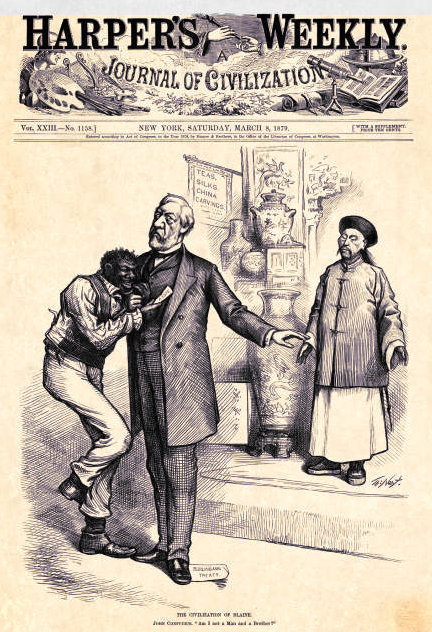
Cross-cultural issues and the challenges have been enhanced around the world as a result of improved connectivity, owing primarily to the network's position, the expansion of commercial exchange, and the intensity of migratory flows. It has also seen the most remarkable market growth and deepening since capitalism's birth, culminating in negative globalization (Lee & Zhao, 2003) Faced with this, “positive globalization” has arisen, arising from the rise of a global social movement, global normative structures in support of human rights, and debates that have sought to deepen the character of knowledge and culture at the same level. Many of these categories, such as hygiene habits, vaccination, and basic schooling, are implicit in some countries where social policy has been well established, and have been properly internalized and accepted as something common in people and institutions for a long time. spanning many generations and becoming part of a broader national cultural trend in other countries or territories, there has been no change in institutional and social “internalization” of these essential life parameters. While this is a weakness reflected in unfavorable social metrics, it also represents an opportunity, as revised trends will emerge that integrate diversity and identify intelligent structures to guide redevelopment. The community is very important in Chinese culture, while the member is very important in American culture. Individuals can shine in the United States, while in China, any success is regarded as a success for the business, the family, or the team. Rather than looking out only for themselves, a Chinese individual may consider how their behavior will influence the community as a whole. Symbols, vocabulary, customs, beliefs, and objects are the main components of culture.
 |
Language promotes meaningful social contact and forms people's perceptions of concepts and objects (Paul, 2009). Individualism, competitiveness, and a commitment to the work ethic are among the main values that characterize the United States. The community is very important in Chinese culture, while the member is very important in American culture. Individuals can shine in the United States, while in China, any success is regarded as a success for the business, the family, or the team. Rather than looking out only for themselves, a Chinese individual may consider how their behavior will influence the community as a whole. At a macro level, that is, at the level of action structures, culture resurfaces as an integral component for Parsons. Other systems of action, like the cultural framework, structure the context in which social systems emerge (Anderson & Blayer, 2005). The boundaries of social structures are described in terms of their reciprocal relationships with the organism, actions, individual personality, and cultural systems. The main criticism of this classic answer to the problem of double contingency is that it places an undue normative emphasis on the social dimension, i.e., the formation of a consensus. The double contingency problem, on the other hand, can be solved in other dimensions, such as by a series of arbitrary events on a time horizon.

As a result, while the likelihood of a cultural orientation in concrete interaction situations is entirely possible, cultural convergence appears as one choice among many, not as an unavoidable rule (Hiromi, 2010). Culture can be interpreted in this way by looking at its own susceptibility to selections, or contingency. Culture addresses the issue of "interdependence of perceptions" or "double contingency between Alter and Ego" at the level of basic experiences, and it retains patterns and evaluative orientations at the level of more complex systems: Culture offers standards value orientations that are implemented in evaluative processes in these basic social interactions, as well as in large-scale social structures. Human personalities and social structures would not be possible without culture.
A culture assimilation must be able to account for its own operability in society, like its ability to replicate and interact. Neither the anthropological theories of culture, which attempted to encompass the entire human phenomenon, nor the theories that distinguish between the two, have been successful.
Challenges to Chinese Immigration and Assimilation
References
- Lew-Williams, B. (2018). The Chinese must go: Violence, exclusion, and the making of the alien in America. Harvard University Press.
- Young, J. G. (2017). Making America 1920 again? Nativism and US immigration, past and present. Journal on Migration and Human Security, 5(1), 217-235.
- Chen, J. (2019). The Chinese of America. Plunkett Lake Press.
- Price, P. J. (2018). A “Chinese Wall” at the Nation’s Borders: Justice Stephen Field and The Chinese Exclusion Case. J. SUP. CT. HIST., 43, 7-13.
- Lee, E. (2019). America for Americans: A history of xenophobia in the United States. Basic Books.
12 Apr 2023
4003AFE Coursework Assignment Brief and Assignment Guidelines
4003AFE Coursework Assignment Brief and Assignment Guidelines
Portfolio Brief: The portfolio will include 2 files:
One recording for:
1. An individual ORAL presentation of one listed company’s financial background/information. (15-20 slides)

One Word/Pdf file for:
2. A review/summary of an academic paper on your choices (500 words)
3. Personal Development Plan (500 words)
4. A personal reflection on the skills learning from your working (500 words)
1. Individual ORAL presentation of a listed company's financial information
In this individual presentation you have to identify, draw and present information regarding a listed company.
Each student should produce and make an ORAL presentation of no more than 20 slides and a maximum of 15-minute record. Instruction of recording oral presentation is shown on Aula.
Follow the brief below for further information and requirements:
Finding key information about a TESLA decision-making process.
(ii) Research into your chosen TESLA 's financial statements to find its gross profit, profit after tax, total non-current assets and total current liabilities for the past 5 years. The financial information is not exhaustive. In addition, you must calculate any movements in these values and express them in percentages.
(iii) Most recent basic Earnings Per Share (EPS) values or any concepts that might affect investors’ decisions in your understanding.
(iv) The Presentation must be prepared using PowerPoint with no more than 20 slides. The final slide is for references. You must follow APA referencing style.

2. A Review/Summary of An Academic Paper (500 words)
The students need to review/summarize a published academic paper/article. This paper can be relevant to your presentation or any topic related to economics, finance or accounting. (500 words).
3. A Personal Development Plan (500 words)
Please review the explanation and example on Aula.
4. A Personal Reflection on the skills learning from your working (500 words)
Write a self-evaluation/reflection on the skills you learnt from your works. For example:
Time Management: e.g. how did you plan your schedule to ensure finishing your works on time?
Technical/IT skills: e.g. Is there anything new that you had to learn yourself to produce your slide/record?
Information searching: e.g. how to correctly look for an academic paper (not an media article or similarity) related your interest? How to determine correct source?
The list of skills is not exhaustive.
Layout
Font style, Arial, font size 12
1.5 line spacing.
The page orientation should be ‘portrait’
Margins on both sides of the page should be no less than 2.5 cm
Pages should be numbered.
Remembering Dr Zafrullah Chowdhury
Zafrullah Chowdhury: A Revolutionary Who Fights for the People
Zafrullah Chowdhury is a well-known name in Bangladesh, who has dedicated his life to fighting for the rights of the people. He is a medical doctor, public health activist, and freedom fighter, who played a significant role in Bangladesh's liberation war in 1971. Zafrullah's life is an inspiring story of courage, determination, and sacrifice.
 |
| Painting: Zannatul Ferdous |
Early Life and Education
Zafrullah was born on December 27, 1941, in the Chittagong district of Bangladesh. He completed his schooling from Chittagong Collegiate School and later joined Dhaka Medical College to study medicine. After completing his MBBS degree, he went to England to pursue further studies in surgery. He obtained the fellowship of the Royal College of Surgeons (FRCS) from Edinburgh and Glasgow in 1969.
Role in Bangladesh's Liberation War
Zafrullah Chowdhury's role in Bangladesh's liberation war is commendable. He, along with his friend MA Mobin, quit his studies in England and returned to Bangladesh to join the war effort. They renounced their Pakistani citizenship and obtained Indian travel permits to reach Bangladesh through Calcutta. They faced many obstacles, including detention by Pakistani authorities, but they finally reached Bangladesh in late May 1971. Zafrullah then joined the medical team of the provisional government of Bangladesh and provided medical aid to the freedom fighters and civilians.
Founding of Gonoshasthaya Kendra
After the liberation war, Zafrullah Chowdhury became involved in social work and public health activism. He founded Gonoshasthaya Kendra (GK), a non-profit organization, in 1972. The primary objective of GK was to provide healthcare services to the poor and marginalized sections of society. GK has a large kidney dialysis facility, which is the largest of its kind in South Asia.
The cost of treatment at GK is unbelievably low, with 20% of patients paying only Tk 800 and the maximum fee being Tk 2,500, which includes all other additional fees. GK deals with about 250 such patients every day, 10-12% of whom get their treatment for free.
Zafrullah's Contributions to the Pharmaceutical Industry
Bangladesh's drug market used to be dependent on imports and controlled by multinational companies. Zafrullah Chowdhury approached Bangabandhu Sheikh Mujibur Rahman about the need to build a local pharmaceutical industry. His suggestion that drugs should be imported from socialist countries was heeded by Bangabandhu, who then persuaded President Ziaur Rahman to follow a similar policy. Ziaur Rahman wanted Zafrullah to join his cabinet and work on the drug policy, but Zafrullah declined the offer in a four-page letter, citing the presence of an anti-liberation politician in Zia's cabinet. In 1982, he persuaded Ershad to adopt a drug policy, which banned the import of thousands of unnecessary drugs. The boom that Bangladesh's pharmaceutical industry has since witnessed was a direct result of that drug policy. Bangladesh now exports drugs, in addition to meeting 95% of local demands.
Zafrullah's Simple Life and Honesty
Zafrullah Chowdhury has won many national and international awards, including the Ramon Magsaysay award, for his contributions to public health and social work. Although he lives a very simple life himself, he has always been hardworking and dedicated to his cause. He always did what he thought was best for people and never thought of the consequences of his activities. Even his worst enemies won't be able to raise allegations of dishonesty against him. Gonoshasthaya Kendra.
 |
Advocate for Social Justice and Human Rights
Chowdhury was a vocal advocate for social justice and human rights. He was critical of the government's policies, particularly those that neglected the needs of the poor and marginalized. He was also an advocate for secularism, and his outspokenness on the issue often earned him the ire of conservative religious groups. Despite facing numerous challenges and obstacles, Chowdhury remained steadfast in his commitment to social justice and human rights.
Awards and Recognition
Chowdhury's contributions to Bangladesh's healthcare system and social justice movement have been widely recognized. He received numerous awards and honors, including the Ramon Magsaysay award, one of the highest honors for social work in Asia.
He was also recognized by the World Health Organization for his contributions to primary healthcare.
Legacy and Impact
Despite his many accomplishments, Chowdhury remained humble and lived a simple life. He was known for his dedication to his work and his unwavering commitment to improving the lives of others. His passing is a great loss to Bangladesh and to the global community of social activists and healthcare professionals. However, his legacy will continue to inspire generations to come to work towards a more just and equitable world.
In conclusion, Zafrullah Chowdhury was a remarkable individual who made significant contributions to Bangladesh's healthcare system and social justice movement. His unwavering commitment to improving the lives of others and his dedication to his country serve as an inspiration to us all. He will be deeply missed, but his legacy will continue to inspire and guide us towards a more just and equitable world.
Subscribe to:
Posts (Atom)